
【学生体験談】JoinTECH-Visitでベニス大学カ・フォスカリ校に留学 Two KIT Undergraduate Students Sent to Ca’ Foscari University of Venice through JoinTECH-Visit.
| 派遣学生 / Participant(s) | 工芸科学部 応用化学課程2名 / Two Undergraduate students in Applied Chemistry |
|---|---|
| 期間 / Period | 令和7年10月7日~令和7年11月6日 / October 7, 2025 – November 6, 2025 |
| 派遣元 / Home university | ベニス大学カ・フォスカリ校(イタリア) / Caʼ Foscari University of Venice(Italy) |
【学生体験談】
私は、JoinTECH-Visitにてイタリアのベニス大学カ・フォスカリ校で研究活動に参加しました。大学があるメストレには、バスや電車が非常に多く通っており、交通の面でも、利便性は高かったです。また、現地の人々は非常に優しく、駅で困っていたときに現地の人から助けが必要か聞いてきてくれたこともありました。
私が所属した研究室は、博士課程の院生の学生4名と2名の教授からなる研究室でした。修士や学部生は1人もいませんでした。日本の自身が所属している研究室は、修士の院生11 名と学部生9名のため、人数も構成も大きく異なっていることに驚かされました。また、4名の博士課程の院生は、2名がイタリア人で、残り2名がスペイン人でした。研究の進め方に関しても、日本の研究室とは大きな違いが見られました。日本の研究室にいた際は、実験をする割合が、論文等を通じた先行研究や教科書等の勉強の割合に比べて多かったのですが、イタリアの研究室にいた際は、論文などを用いた勉強をする時間が圧倒的に多く感じました。他の学生も同様のようで、実験をする時間は1週間を通じてもあまり多くはないようです。自身の実験に関しては、教授やドクターの学生に教えてもらいながら進めることが多かったですが、全員優しく丁寧に教えていただきました。
研究室では、金属量子ドット(特に銅、銀量子ドット)の合成・測定・分析方法を中心に習得しました。研究室で使用した装置は、メーカーや測定方法が日本のものとはかなり異なっていたため、測定データをもとに、解析方法を教えてもらいながら、グラフを作成したり、何度も実験を繰り返しました。留学期間中に行った内容の再現実験およびその応用の実験を、今後日本でも行っていきたいと考えています。
(工芸科学部 応用化学課程 4年次 Fさん)
Student report:
I participated in research at Ca’ Foscari University of Venice throuth the JoinTECH-Visit Program. In Mestre, where the university is located, there were many buses and trains, making transportation very convenient. The local people were also very kind. For example, when I was lost at a station, someone came to ask if I needed help. At supermarkets, people always greeted each other when entering or at the checkout, showing how friendly they were.
The laboratory I belonged to consisted of four Ph.D. students and two professors. There
were no master’s or bachelor’s students. I was surprised by this, because in my laboratory in Japan, there are 11 master’s students and 9 bachelor’s students, so both the number of members and the structure are very different. Among the four Ph.D. students, two were Italian and the other two were Spanish. There were also big differences in the way research was carried out compared to Japanese laboratories. In my Japanese lab, I usually spend more time doing experiments than studying previous research through papers or textbooks. However, in the Italian lab, I spent much more time studying papers and learning theoretical background. It seemed that other students were the same, and the total time they spent on experiments during a week was not very long. As for my own experiments, I often worked while being taught by professors and Ph.D. students. Everyone was kind and taught me
carefully and patiently.
In the laboratory, I mainly learned the synthesis, measurement, and analysis methods for metal quantum dots, particularly copper and silver quantum dots. The equipment used in the lab was quite different from what is commonly used in Japan, both in terms of manufacturer and measurement methods. Because of this, I repeatedly conducted experiments, created graphs based on the measurement data, and learned the analysis methods with guidance. In the future, I would like to continue these reproduction and application experiments in Japan
(F, 4th year Undergraduate Student in Applied Chemistry)
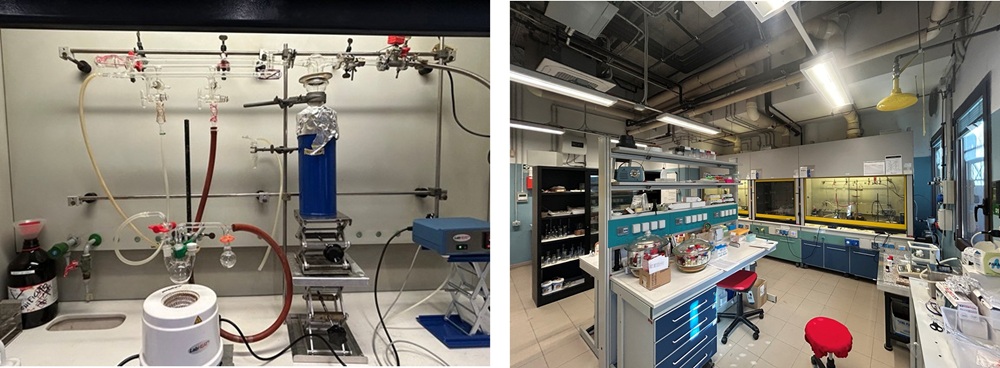
研究室内の様子/Scenes from the laboratory
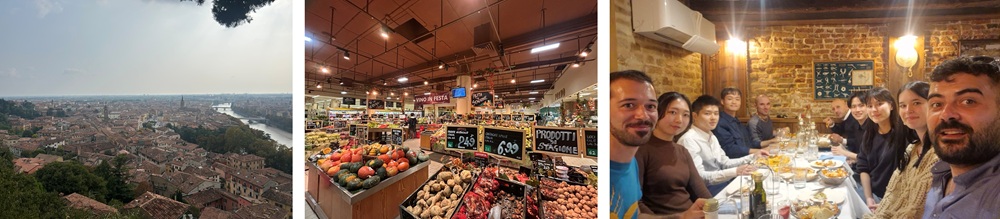
左:イタリアの街並み(ベニス&ヴェローナ)/Cityscapes of Italy: Venice and Verona
中央:現地のスーパーマーケット(メストレ)/A local grocery store in Mestre
右:研究室のメンバーとのディナー/Dinner with lab members
【学生体験談】
私は将来、海外で活躍できる研究者になりたいと考えているため、1か月のJoinTECH-Visitで、イタリアのベニス大学カ・フォスカリ校にて研究活動を行い、研鑽を積みました。日本で私が研究に用いているカーボン量子ドット(CQDs)と同じ類である金属量子ドットCuInS2 QDsの合成方法とCuInS2 QDsをコーティングするためのZnSシェルの形成方法、そして、解析技術として用いている機械学習について学習を深めることを目的とし、Riccardo Marin准教授の研究室に配属となりました。
日本で私が扱っているカーボン量子ドットの合成方法とCuInS2 QDsの合成方法は大きく異なりました。前者は電気炉の中に反応混合物を置き、長時間加熱を行うことで容易に合成されますが、後者はシュレンクラインという高価なガラス器具で真空状態や窒素雰囲気を制御しなければならず、複雑な過程を要し、危険な試薬も必要でした。そのため、これまでに扱ったことがない多様な器具や装置に触れることができ、日本で行っている研究では体験できない様々な技術を学べ、非常に貴重な経験ができました。また、上記で述べたように危険な試薬や高価な器具を用いたため、先生や研究室の方々の指示を明確に理解する必要があり、私は疑問が生じる度に質問をしましたが、言いたいことが1回で伝わらないことが何度かありました。しかし、そのような場合でも、いつであっても先生や研究室の方々は丁寧に受け答えをしてくださり、私が気軽に英語を話すことができるような環境を整えてくださいました。その結果、円滑に研究目的を達成することができ、加えて英会話力も向上したと感じています。英語を正しく話そうとすることは当然、重要ですが、それ以上に、あきらめずにコミュニケーションを取り続けようとする積極的な姿勢が非常に大切であることを私は身をもって実感しました。
今回の留学では金属量子ドットの研究に加えて機械学習についても学習しました。機械学習は先端的で非常に有用な技術であることから近年、ますます注目を集めていますが、その背景にある理論は非常に難解です。そのような機械学習の一分野であるニューラルネットワークについて、Marin准教授は疑問点に対してもわかりやすく説明をしてくださり、理解できるまで熱心に時間を割いてご指導くださいました。また、Marin准教授が携わった論文についても詳細にご教授くださり、自力では理解できなかったことも直接、質問することで深く学ぶことができました。
本留学は、専門分野の知識と技術を深めるだけでなく、海外の研究者との交流を通じて研究者としての視野を大きく広げることができる非常に貴重な経験でありました。今回得た学びを今後の研究活動に生かし、さらなる成長を目指して取り組んでいきたいです。
(工芸科学部 応用化学課程 4年次 Oさん)
Student report:
I would like to become a researcher who can work internationally in the future. To move toward that goal, I spent one month doing research at Ca’ Foscari University of Venice in Italy through JoinTECH-Visit Program. I was assigned to the laboratory of Associate Professor Riccardo Marin with the aim of learning the synthesis method of CuInS₂ metal quantum dots (CuInS₂ QDs), which are similar to the carbon quantum dots (CQDs) I study in Japan, the method of formation about ZnS shell to coat CuInS₂ QDs and the machine learning techniques used for data analysis.
The synthesis method of CuInS2 QDs is very different from the one of CQDs I use in Japan. In the case of CQDs, I only have to heat the reaction mixture in an electric furnace for a long time, so, it is easy to synthesize CQDs, but the method of CuInS2 QDs required dangerous chemicals and complicated processes, including using an expensive laboratory glassware called Schlenk line to control vacuum and nitrogen gas. Therefore, I used many tools I had never handled before and learned techniques I could not experience in Japan. So, it was a very valuable opportunity for me. Also, because I worked with dangerous chemicals and expensive equipment, I had to clearly understand the instructions from the teacher and lab members. I asked questions whenever I was unsure, but sometimes I couldn’t express myself well in English. Even so, the teacher and lab members always talked with me kindly, and they created an environment where I felt comfortable speaking English. Thanks to that, I was able to complete my research smoothly, and I feel that my English-speaking skills improved. While trying to speak English correctly is undoubtedly important, I came to deeply understand that maintaining a proactive attitude and continuing to communicate without giving up is even more crucial.
In addition to research on metal quantum dots, I also had the opportunity to study machine learning. Machine learning is a cutting-edge and highly useful technology, and it has been attracting increasing attention in recent years. However, its underlying theories are quite complex. Associate Professor Riccardo Marin took the time to thoroughly explain neural networks, a branch of machine learning, and patiently answered my questions until I fully understood. He also kindly guided me through papers he had contributed to. By asking him directly, I completely grasped what I couldn’t fully understand on my own.
This study abroad not only helped me deepen my knowledge and skills in my field of specialization but also allowed me to broaden my perspective as a researcher through interactions with researchers from overseas, so, it was a very meaningful experience for me. I hope to make good use of what I have learned and continue growing through my future research activities.
(O, 4th year Undergraduate Student in Applied Chemistry)
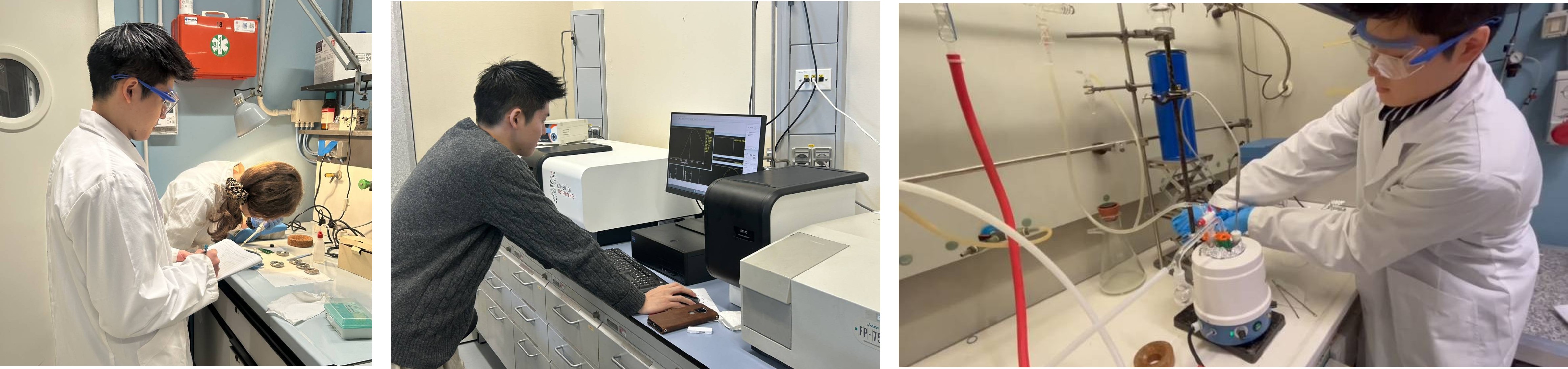
研究室での実験の様子/Conducting experiments in the laboratory
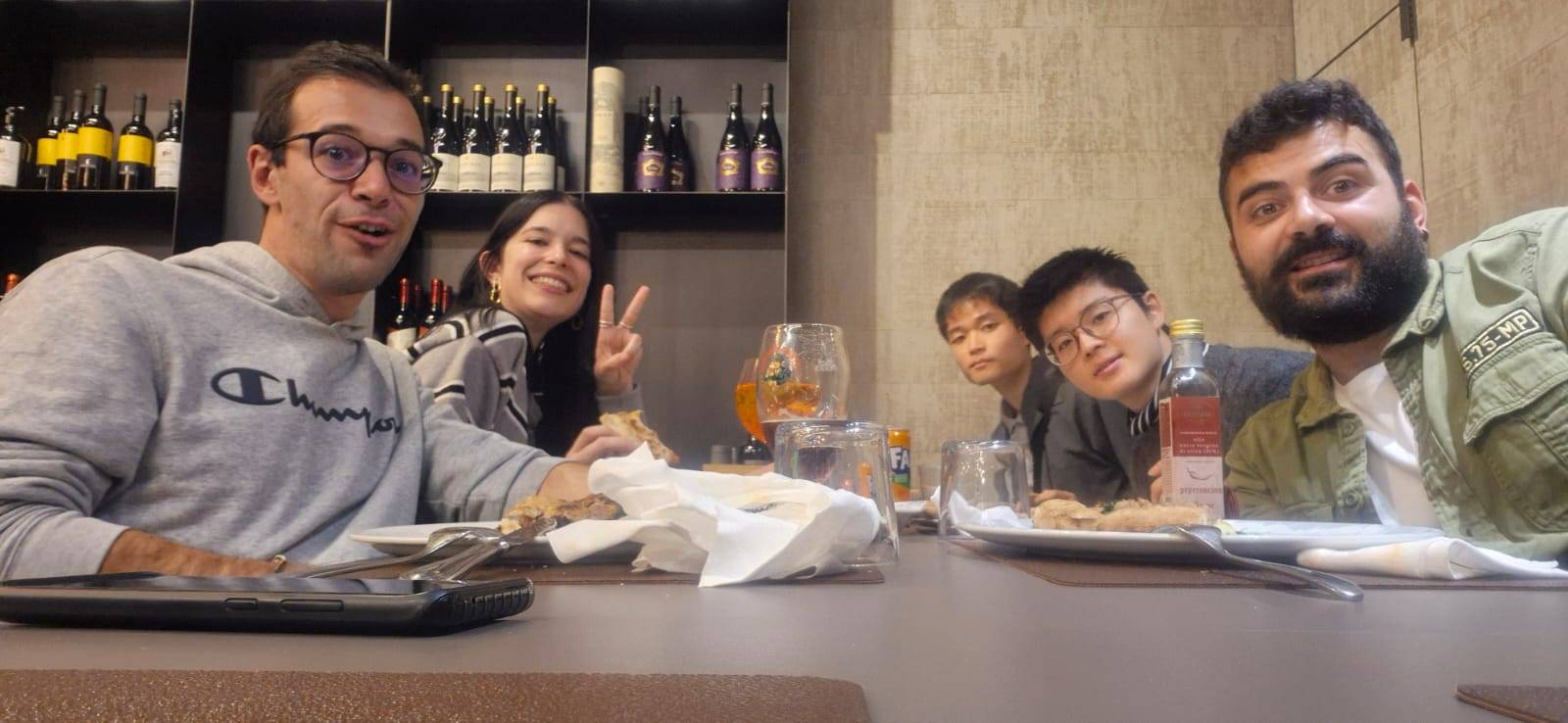
研究所メンバーとディナー/Dinner with lab members